
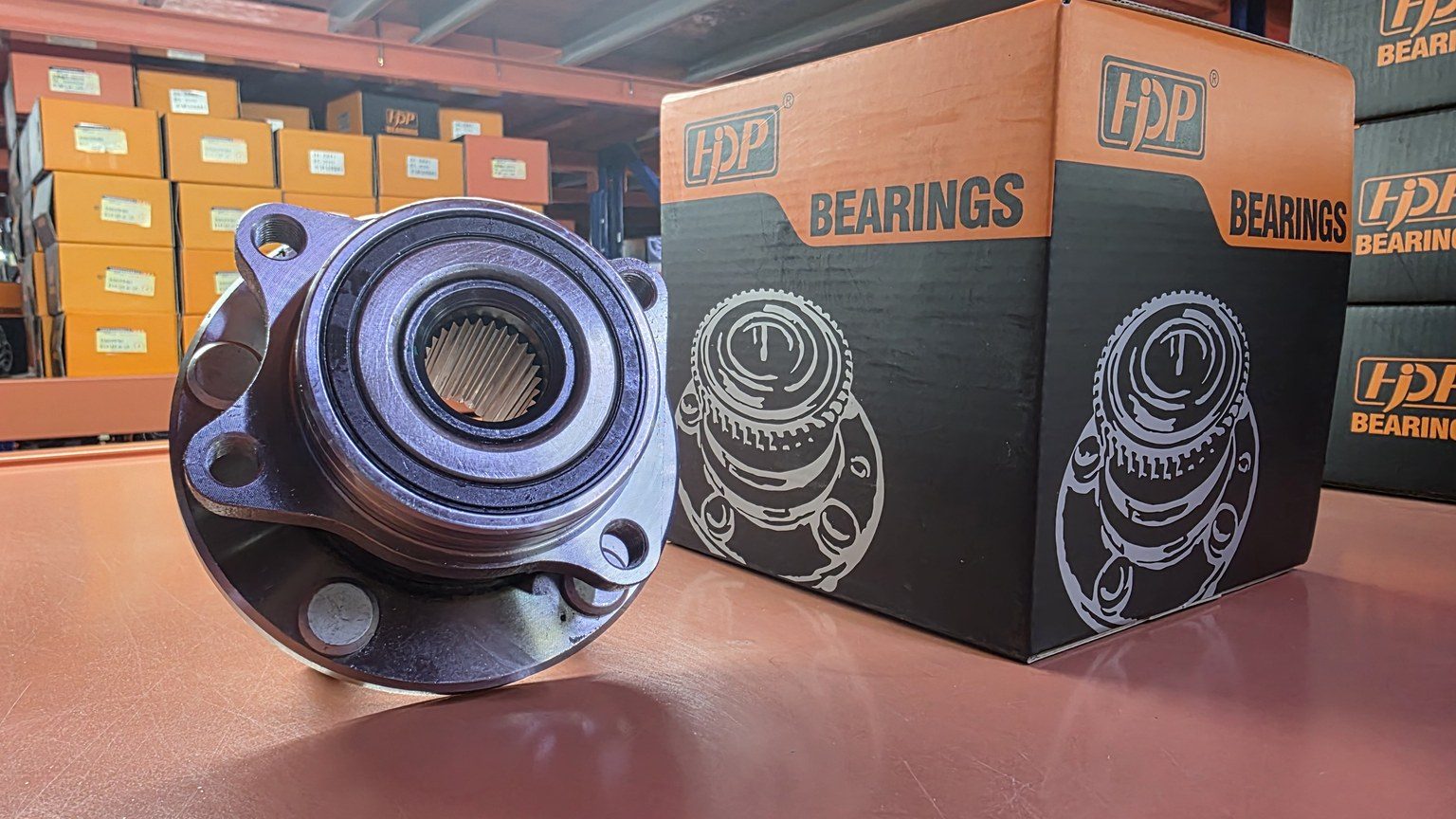
What Does a Wheel Hub Bearing Do on the Mitsubishi Lancer VIII?

A wheel hub bearing for the Mitsubishi Lancer VIII carries the vertical load of the vehicle, keeps the brake disc or drum concentric with the caliper, and provides a true face for clamping the wheel. Because one part performs all three duties, wear can appear as noise, wheel play, uneven brake wear or an ABS warning rather than as one obvious symptom. Identifying which of the three functions has failed is what separates a correct repair from a parts-guessing exercise.
How a hub unit is built
A hub unit is a sealed, pre-greased assembly, and nothing inside it is designed to be adjusted or re-greased in service. The main elements are:
- Outer ring or housing — carries two raceways and, in second- and third-generation designs, the flange that bolts to the steering knuckle.
- Inner rings and hub flange — the rotating element, with wheel studs pressed or formed into the flange face.
- Rolling elements and cage — a double row of balls or rollers that shares load between two raceways.
- Grease — a sealed-for-life charge, typically a lithium-complex or polyurea type selected for the temperature of that corner of the car.
- Seals — a lip seal inboard and often a cassette or combined seal outboard, which is the side exposed to water, salt and pressure washing.
- Magnetic encoder ring — a rubber-bonded or sintered ring read by the ABS sensor; it belongs to the bearing, not to the sensor.
Rings and rolling elements are typically made from through-hardening bearing steel such as 100Cr6 (GCr15 equivalent), hardened and tempered into the 58–65 HRC range, while flanges are formed from medium-carbon steel and induction hardened at the seal seat and stud holes. For a buyer, the material grade matters less than the consistency behind it: the same part number from two suppliers can differ in steel source, heat-treat depth and grease fill, and those differences surface as life spread in the field rather than as a visible defect on arrival.
Where it sits and what loads it carries
The hub bearing carries radial load, axial load and a bending moment, and the moment is usually what limits life. Radial load comes from vehicle weight, axial load from cornering, and the moment from wheel offset, which places the tyre contact patch outboard of the bearing centreline. A double row of angular-contact balls suits this combination because each row takes load in one direction; the contact angle is fixed at design stage, so there is no preload setting to make in service.
Front and rear duty differ on this platform. A front hub on a front-wheel-drive Lancer VIII steers and brakes, so it sees higher axial load and more heat soak from the brakes, while a rear hub on a disc-brake car carries less steer load but is more exposed to water thrown from the rear arch. Front and rear parts therefore rarely share a design, even when the stud pattern looks similar.
Which Hub Bearing Type Does the Mitsubishi Lancer VIII Use?
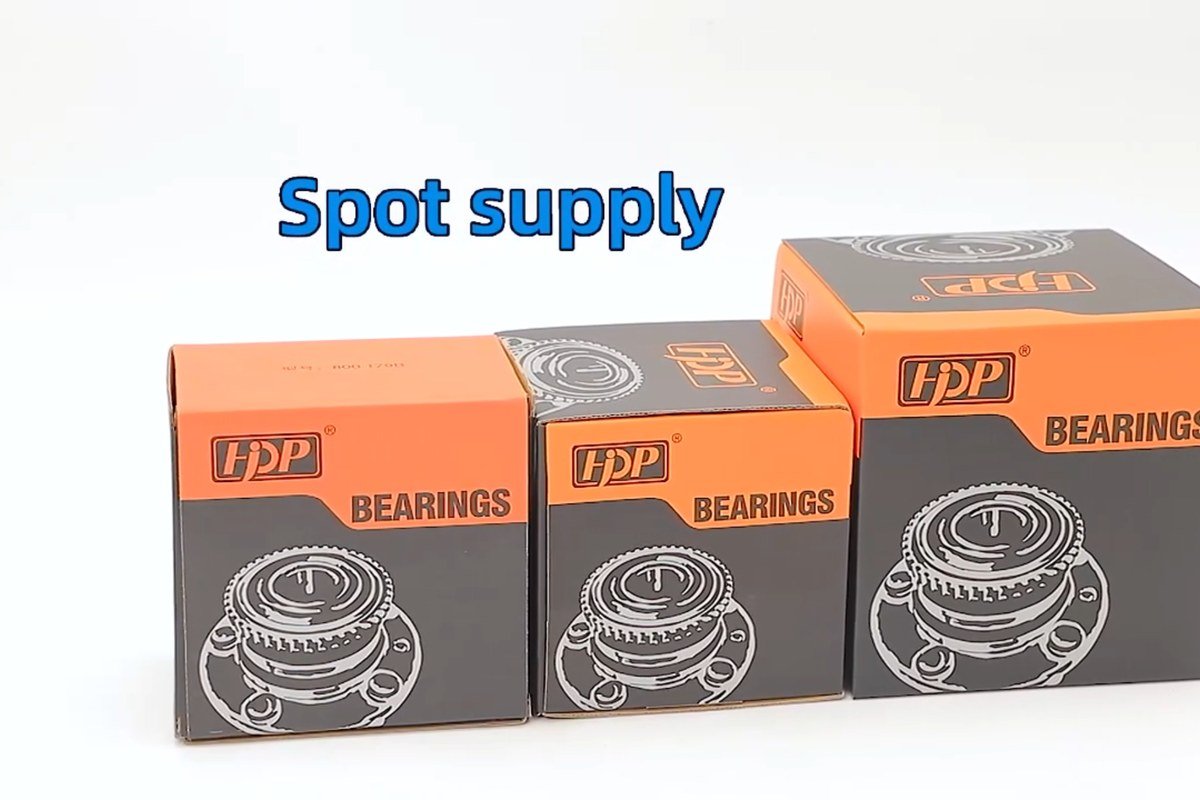
The Lancer VIII is not tied to a single hub bearing design, so the generation and the axle must be identified before a part is quoted. The same nameplate was sold across markets with different brake packages and ABS systems, and a catalogue may list a press-in bearing for one version and a complete bolt-on hub unit for another. Any listing that names only the vehicle model is a starting point, not a confirmation.
First-, second- and third-generation hub units compared
| Generation | What is integrated | How it mounts | ABS provision | Service consequence |
|---|---|---|---|---|
| First | Bearing only, double row | Press-fit into the knuckle or onto a stub axle, retained by snap ring or axle nut | Tone ring on the disc, the shaft or a separate ring | Bearing alone can be replaced; hub flange is reused |
| Second | Bearing plus outer flanged housing | Bolted to the knuckle, usually three or four bolts | Encoder often built into the bearing seal | Unit replaced as a set; hub flange may still be separate |
| Third | Bearing, hub flange, housing and encoder in one sealed unit | Bolts directly to the knuckle with integral wheel studs | Encoder ring integrated; sensor mounted in the knuckle | No pressing and no adjustment; the complete unit is replaced |
The practical consequence is commercial as well as technical. A first-generation press-in bearing can be renewed on its own, while a third-generation unit must be replaced complete, so a price comparison between a bare bearing and a hub assembly is not like for like. The difference between a bearing and a full hub assembly is explained in more detail in this guide to wheel bearing versus hub assembly.
Ball, tapered roller or cylindrical roller
The rolling element is chosen from the load direction and the stiffness the corner needs, not from the vehicle's size alone. Passenger-car hub units are dominated by double-row ball designs because they run quietly and hold preload without adjustment, while roller designs appear where load or stiffness is higher.
| Rolling element | Load capacity and direction | Where it is used | Trade-off |
|---|---|---|---|
| Double row of balls, angular contact | Moderate radial, good axial capacity in both directions | Most passenger-car front and rear hub units, including bolt-on Lancer VIII type units | Low friction and quiet running; less tolerant of shock load and water ingress |
| Double row of tapered rollers | High radial and axial capacity; stiff under moment load | Heavier cars, towing duty, some rear axles and older press-in designs | Higher friction; preload must be set accurately at assembly |
| Double row of cylindrical rollers | Very high radial capacity, limited axial capacity | Commercial vehicle and light-truck hubs, some rear axles | Requires separate axial location; not a direct substitute for a ball unit |
A double-row hub bearing with an integrated ABS encoder, such as the DAC-series hub bearing with ABS encoder, shows how the seal and the sensor ring are combined in one component: the encoder sits in the seal, so a damaged seal is also an ABS fault waiting to happen.
How front and rear axles differ on this platform
Front and rear hub parts on a Lancer VIII are selected against different duty cycles and should never be ordered from one shared description. The front corner combines steering load, brake heat and, on driven axles, a CV joint passing through the centre of the hub; the rear corner is lighter but sits in more spray. Selection criteria for both are set out in this hub assembly selection guide, which is worth working through before a mixed front-and-rear order is finalised.
How Do You Read the Drawing and Confirm Fitment for a Lancer VIII Hub Bearing?
Fitment is confirmed by a small set of drawing dimensions plus the OE number, not by the model name. Two bearings that look identical on the bench can differ by a few tenths of a millimetre in bore or flange height, which is enough to change brake disc runout, ABS sensor air gap or the way the wheel seats.
The dimensions that decide whether it fits
- Flange outer diameter — sets the relationship to the brake disc and the knuckle shield.
- Wheel stud pattern — stud count, pitch circle diameter, thread size and stud length.
- Bearing bore and width — decisive for press-in designs, where the bore must match the knuckle or stub axle exactly.
- Overall height and flange offset — controls disc position and caliper alignment.
- Mounting bolt pattern — bolt count and spacing for bolt-on units, plus the knuckle spigot diameter.
- Encoder type and sensor interface — magnetic encoder in the seal, tone ring on the flange, or a separate ring, with the matching tooth count for inductive systems.
- Seal arrangement — inboard and outboard seal style, including whether the seal is directional.
OE numbers, encoder type and cross-reference
The OE number identifies the exact design, while the encoder type identifies whether the ABS system will accept it. Two hub units can share every mechanical dimension and still differ in encoder construction, which produces a wheel-speed fault rather than a fitment problem. Cross-references are useful for narrowing the field, but they should always be closed out against a drawing and, where possible, a physical sample; the number-matching process is covered in this article on OE number fitment and ABS hub bearings.
A six-step fitment confirmation sequence
- Record the vehicle's OE number, ABS type and axle position, and note whether the original part is press-in or bolt-on.
- Compare the candidate part's flange diameter, stud pattern and overall height with the drawing in millimetres, not by eye.
- Confirm the encoder type and tooth count against the ABS system on the vehicle.
- Check the seal arrangement and confirm the outboard side will face the road, not the gearbox.
- Request a physical sample or a production sample photograph with a scale reference before releasing a batch.
- Record the confirmed parameters on the purchase order so repeat orders cannot drift. A structured wheel hub bearing RFQ checklist keeps those six points in one place.
What Makes Lancer VIII Hub Bearings Fail, and How Do You Diagnose It?
Most hub bearing failures on this platform are sealing and lubrication failures, not steel fatigue at normal mileage. Water passing the outboard seal washes grease out, the raceway corrodes, and spalling follows. Impact damage, incorrect installation and a contaminated encoder ring account for most of the remainder, which is why the seal and the encoder deserve as much attention as the bearing itself.
Failure modes and how to confirm them
| Symptom | Likely mechanism | How to confirm |
|---|---|---|
| Hum or growl that rises with road speed and changes when the car is loaded left or right | Raceway spalling after water ingress or grease loss | Road test with deliberate load transfer; hand-spin each wheel with the pads clear |
| Play felt at 12 and 6 o'clock with the wheel lifted | Worn raceway, loose axle nut or worn knuckle bore | Rock the wheel vertically; repeat with a dial gauge on the flange |
| ABS warning for one wheel with no mechanical noise | Damaged or contaminated encoder ring, or incorrect sensor air gap | Scan tool for the wheel-speed code, then inspect the encoder with the disc removed |
| Grease streaks and rust staining around the outboard seal | Seal lip wear or a damaged cassette seal | Inspect after disc removal and check the same unit for play |
| Brake pedal pulsation that returns after disc replacement | Flange runout from a distorted hub flange | Dial gauge on the flange face with the disc off |
| Clicking or knocking on full lock | CV joint rather than the bearing | Check the boot for splits and grease loss; the noise follows steering angle |
On-car checks that separate bearing noise from tyre and CV noise
A road test with load transfer is the fastest way to separate hub bearing noise from tyre noise, because bearing noise changes with load direction and tyre noise does not. Swerve gently left and right at a steady speed: a worn front hub bearing usually gets louder when the loaded side changes, and a rear one is quieter but still speed-dependent. Then raise the car, clear the pads from the disc, and spin each wheel by hand while feeling for roughness and listening for a dry, gravelly sound. Tyre noise stays similar on smooth and coarse surfaces; CV joint noise appears as clicking on full lock; a failing bearing follows speed.
For a longer symptom list, including vibration and uneven pad wear, see this guide on how to tell a wheel hub bearing is failing.
How Should a Hub Unit Be Installed and Replaced on a Lancer VIII?
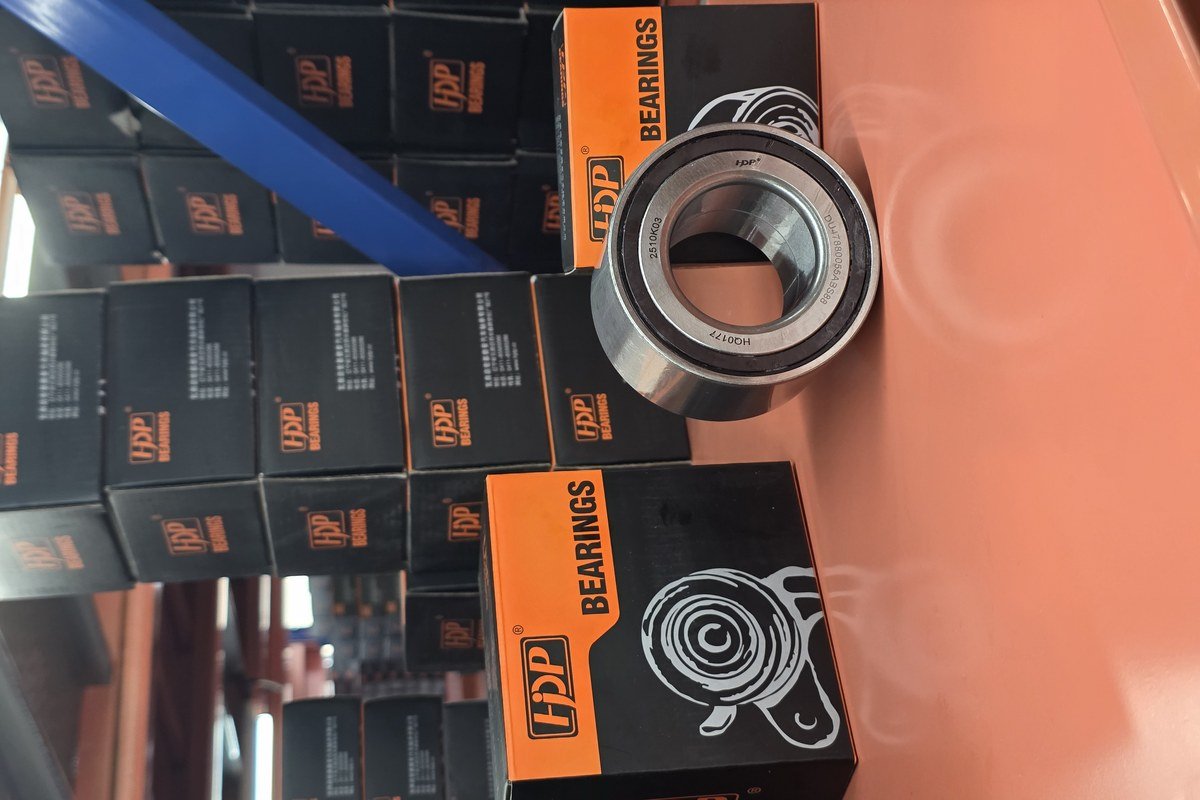
Correct installation is mostly about where the force goes and how clean the knuckle bore is. A unit pressed or driven by the wrong surface is damaged before the car leaves the ramp, and a bore with rust scale or burrs tilts the unit and destroys the seal within a short distance.
- Confirm the part against the drawing, OE number and ABS type before dismantling anything.
- Loosen the axle nut with the wheel on the ground and the brakes applied, then raise and support the vehicle.
- Remove the wheel, unbolt the caliper and hang it aside without straining the hose, then remove the disc or drum.
- Disconnect and remove the ABS sensor where the design allows; sensors are easily damaged when a hub is dragged past them.
- Remove the axle nut and release the hub — unbolt a third-generation unit, or press out a press-in bearing with a driver bearing on the outer ring.
- Clean the knuckle bore and mounting face to bare metal, remove burrs and corrosion, and check the bore for out-of-round.
- Start the new unit by hand to make sure it is square, then press or draw it in on the outer ring or housing flange — never on the studs, the flange face or the inner ring.
- Torque the mounting bolts or axle nut to the vehicle manufacturer's figure in a crossing pattern, and fit a new lock nut where specified.
- Refit the sensor, check the air gap and encoder cleanliness, rebuild the brakes, road test, and re-check torque after the first heat cycle.
Installation errors that shorten service life
Nearly every premature hub failure seen in warranty returns traces back to one of a short list of fitting errors. The most common are pressing on the inner ring instead of the outer, hammering a unit into a corroded bore, reusing a staked axle nut, trapping debris between the flange and the disc, contaminating the encoder with grease or paint, and over-torquing wheel studs with a rattle gun. Each of these damages the part in a way that is invisible on the bench and obvious only after a few thousand kilometres.
What Should Importers Check When a Hub Bearing Shipment Arrives?
Incoming inspection should confirm the fitment dimensions, the encoder and the seals before any stock is booked in. A sample check of a few pieces per batch catches most dimensional and handling problems, and it costs far less than a return from a workshop.
| Inspection item | Method | Reject if |
|---|---|---|
| Flange diameter and stud pattern | Caliper or go/no-go gauge against the drawing | Outside drawing tolerance or stud spacing uneven |
| Bore and overall height | Micrometer and height gauge on press-in types | Any deviation, or taper inside the bore |
| Encoder ring | Visual check and sensor test where equipment allows | Cracked, greasy, painted over or missing segments |
| Seal lips | Visual check under good light | Lip rolled, cut, or grease already weeping |
| Rotation feel | Hand spin with light axial load | Roughness, clicking or measurable play |
| Studs and threads | Thread gauge and straightness check | Cross-threaded, loose or wrong length |
| Marking and batch code | Compare against the purchase order | Missing batch code or mismatched part number |
Packaging, marking and private label
Packaging is part of the product for aftermarket buyers, because it carries the traceability that a workshop claim depends on. Jinan Huayuan Bearing Co., Ltd. supplies wheel hub bearings, hub units, tensioners and CV joint components from its base in Jinan, Shandong, develops parts against customer drawings and samples, and supports custom packaging and private-label marking for overseas buyers, mainly in the Middle East and Southeast Asia. Batch marking, neutral cartons and brand cartons should be specified in writing, together with the inspection records the buyer expects to receive; the wider evaluation criteria are set out in this guide to evaluating a wheel bearing and hub assembly supplier. For reference, the related catalogue includes a front wheel hub assembly for Mitsubishi applications and a rear wheel hub assembly for Mitsubishi applications; both are catalogue references, and platform fitment still has to be confirmed against the OE number, drawing and a sample.
Frequently Asked Questions
Does a wheel hub bearing for the Mitsubishi Lancer VIII include the ABS sensor?
No. The sensor is a separate part mounted in the knuckle, while the magnetic encoder ring that the sensor reads is usually built into the bearing seal. When ordering, state the ABS type and the encoder style or tooth count. On older inductive systems a tone ring may sit on the disc or shaft instead, and the two arrangements are not interchangeable.
Can I replace only the bearing, or must I buy the whole hub unit?
It depends on the generation fitted to the vehicle. A first-generation press-in bearing can be replaced on its own and the hub flange reused, while a third-generation unit is a sealed assembly that must be replaced complete. Confirm which design the car carries from the OE number and a drawing before comparing prices.
How can I tell whether the noise is the hub bearing, the tyre or the CV joint?
Hub bearing noise rises steadily with speed and changes when load transfers across the car in a gentle swerve. Tyre noise stays similar on smooth and coarse surfaces, and CV joint noise appears as clicking on full lock. A road test plus a hand-spin with the pads clear separates the three quickly.
Can Huayuan Bearing supply Lancer VIII hub units under my own brand and packaging?
Yes. Jinan Huayuan Bearing Co., Ltd. at huayuanbearing.com develops wheel hub bearings, hub units, tensioners and CV joint components from customer drawings and samples, and supports custom packaging and private-label marking. Fitment must be confirmed against the drawing and a physical sample before production, because the Lancer VIII was built with more than one hub design.
Purchasing guidance, product information and company updates from Huayuan Bearing.