
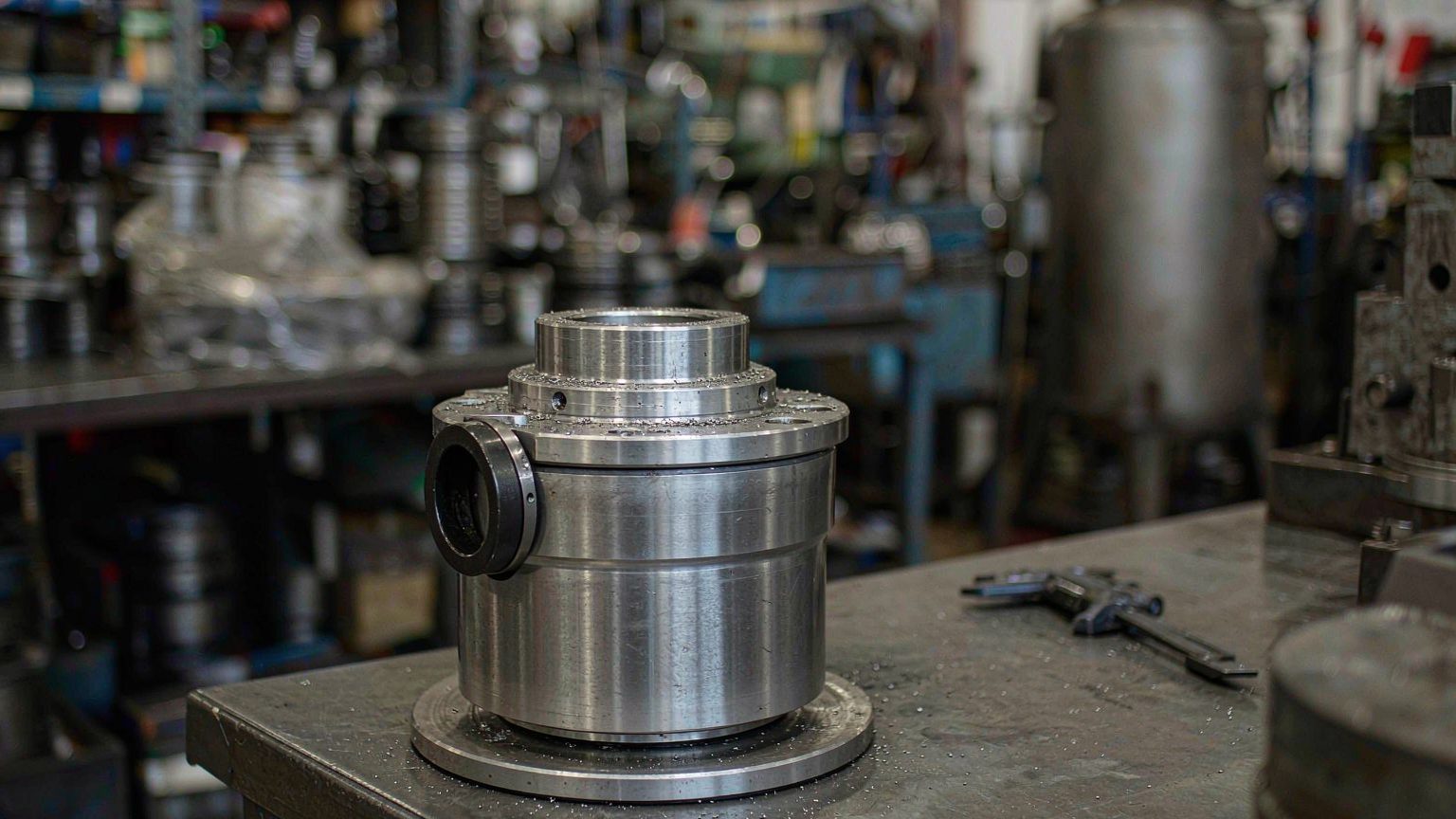
What Is a Wheel Hub and What Does It Carry?
Short answer: a wheel hub does three jobs at once. It transfers vehicle weight into the bearing, it locates the wheel and brake disc on the axle, and on ABS-equipped cars it carries the tone wheel or magnetic encoder that feeds the speed sensor. Those three duties, not the part number, determine every dimension on the drawing.
How the load reaches the bearing
The load path runs from the tyre contact patch through the hub flange, the rolling elements and the outer ring into the knuckle. Because that force acts at a lever arm from the bearing centreline, the bearing sees a radial load plus an overturning moment. Cornering increases the moment, and braking adds a fore-aft force at the same lever arm. A single row of balls cannot resist that combination, which is why hub units use two rows spaced as far apart as the packaging allows.
Hub, wheel bearing and hub unit are not interchangeable terms
Importers lose money on this confusion, so it is worth fixing the vocabulary before any quotation is issued.
| Term | What it contains | Typical application | What must match at order |
|---|---|---|---|
| Wheel bearing | Rolling element set with inner and outer rings, seals and grease | Older drum-brake axles, trailer and light commercial axles | Bore, outside diameter, width, clearance class |
| Hub or flange | Machined disc with studs or bolt holes, no bearing inside | Where the bearing is a separate part | Bolt circle, pilot diameter, offset, stud thread |
| First-generation hub unit | Double-row bearing, both inner rings running on the stub axle | Passenger cars with separate drum or disc mounting | Inner bore, outer diameter, width, ABS variant |
| Second- and third-generation hub unit | Bearing plus one or two flanges, sealed and pre-set | Most current passenger cars, SUVs and light vans | Flange geometry, bolt circle, encoder type, overall height |
Which Generation of Hub Bearing Unit Fits the Vehicle?
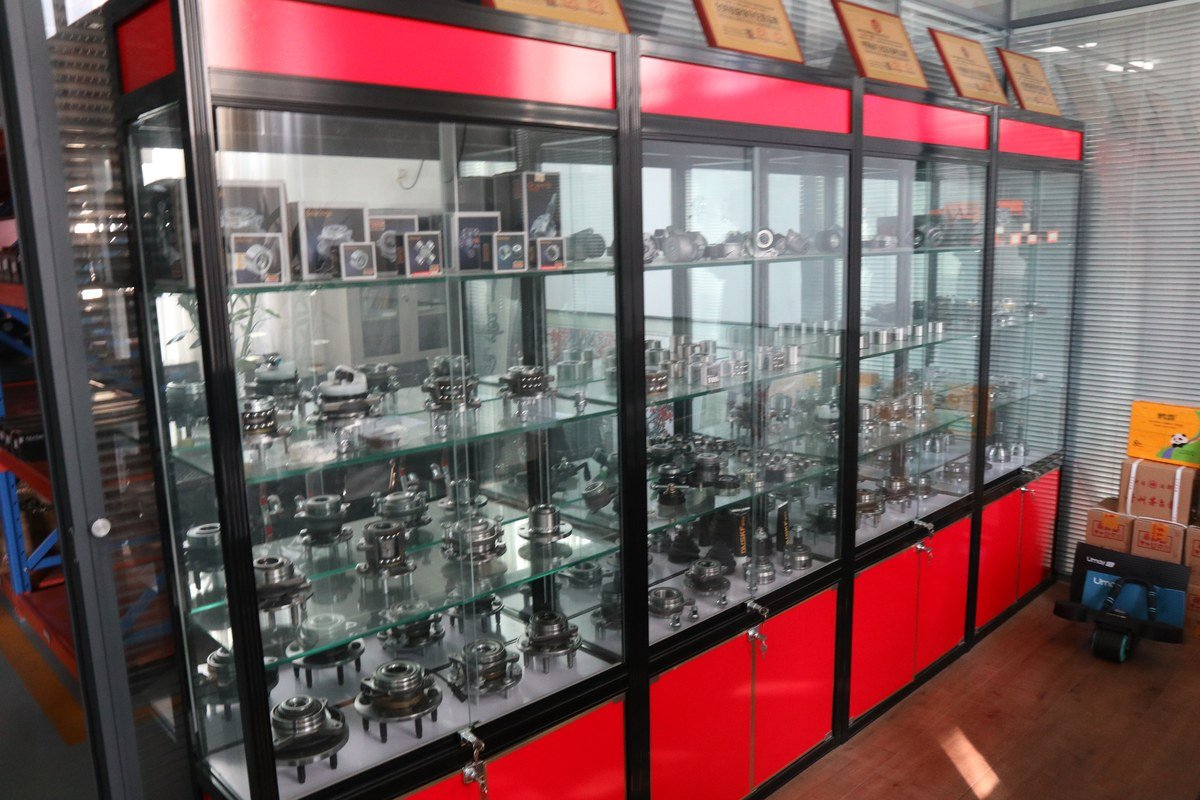
Generation is the first decision because it fixes both mounting interfaces, and a wrong generation cannot be corrected with fasteners. Generation describes how the bearing is integrated with the hub and the suspension, not how strong or how expensive the part is.
| Generation | Inner ring interface | Outer ring interface | ABS interface | Service note |
|---|---|---|---|---|
| First | Two inner rings slide onto the stub axle, clamped by a nut | No flange; seats in the housing or knuckle bore | Optional encoder or separate tone ring | End play is set by the axle nut |
| Second | Slides onto the axle | Flange with threaded holes, bolts to the suspension | Encoder common | Brake disc registers on the bearing flange |
| Third | Flange carries the wheel bolts | Flange bolts to the knuckle | Encoder standard | Sealed, pre-greased, pre-set cartridge |
| Fourth | Integrated with the CV joint outer race or the knuckle | Platform-specific | Encoder standard | Usually supplied as a driveshaft or knuckle assembly |
What goes wrong on first-generation units
Because the axle nut sets the bearing position, incorrect torque is the most common cause of early failure: too loose and the rollers skate and brinell, too tight and the rows are overloaded and run hot. A reused or stretched nut, or a worn stub axle shoulder, produces the same result. End play is adjusted to the vehicle manufacturer's figure, usually a few hundredths of a millimetre, and is never guessed by feel.
What goes wrong on second-generation units
The flange face becomes a functional surface. Corrosion or a burr between the flange and the brake disc introduces lateral runout, which shows up as brake judder or as disc thickness variation rather than as bearing noise. Bolt holes that have been over-torqued, or flanges that have been hammered during removal, distort the seat and lose preload.
What goes wrong on third-generation units
Most field returns trace back to installation. Pressing on the inner ring or on the wheel studs transmits force through the ball rows and leaves indentations that become noise within a few thousand kilometres. Damage to the magnetic encoder, or the wrong encoder type for the sensor, sets an ABS fault immediately. The cartridge itself is not adjustable, so nothing can be corrected after a bad fit.
How to identify the generation from a removed part
- Count the flanges: none means first generation, one means second, two means third.
- Check where the wheel bolts attach: on the bearing inner ring means third generation; on a separate hub or disc means earlier.
- Look for a rubber-bonded magnetic ring on the seal or slinger: that identifies an active ABS interface.
Which Rolling Element Suits the Duty: Tapered Roller, Ball or Cylindrical?
Tapered roller sets carry the highest combined radial and axial load, double-row angular contact ball sets run cooler at speed, and cylindrical roller sets carry very high radial load with almost no axial capacity. The vehicle designer makes that choice; for buyers it explains why two hubs that look alike behave very differently in service.
| Rolling element | Radial capacity | Axial capacity | Heat at speed | Typical position |
|---|---|---|---|---|
| Double-row tapered roller | Very high | High, in both directions when paired | Higher friction, more heat | Light truck, trailer, older rear-drive axles |
| Double-row angular contact ball | Moderate to high | Moderate, set by contact angle | Low friction, quiet running | Passenger car and crossover hub units |
| Cylindrical roller | Very high | Almost none | Low | Heavy commercial hubs with separate axial location |
Tapered roller hub units
Tapered rollers generate axial capacity from their contact angle, so a pair can resist cornering loads without a separate thrust bearing. The trade-off is friction and sensitivity to lubrication: a tapered set running with contaminated grease heats quickly, and one running with the wrong end play fails at the large end of the roller. These units dominate light truck, trailer and older rear-drive applications where load matters more than noise.
Double-row angular contact ball units
Two rows of balls on a common outer ring, assembled with a defined preload, give low friction, low runout and quiet running, which is why they dominate passenger car hub units. They tolerate less abuse: a ball set that loses grease through a damaged seal corrodes on the raceway and starts to growl rather than to rumble. Preload is set at assembly, so the unit must never be clamped by improvised spacers.
Cylindrical roller and combined arrangements
Cylindrical rollers give the highest radial capacity per unit width but cannot locate the shaft axially, so they appear where a separate axial bearing or a shoulder takes that duty. Combined arrangements, with one ball row and one roller row, are used where high radial load and precise location are both required. When a drawing shows a cylindrical roller row, the axial location on the vehicle must be checked before the part is approved.
How Do Material, Heat Treatment, Clearance and Grease Decide Hub Life?
Service life is set more by heat-treatment consistency and by the clearance or preload built in at assembly than by the steel grade alone. Two hubs machined to the same drawing can differ by a factor in field life if those two variables drift.
Bearing steel and heat treatment
Races and rolling elements are normally made from through-hardening bearing steel such as 100Cr6, GCr15 or SAE 52100, hardened and tempered in the region of 58 to 62 HRC, then ground and superfinished. Carbide distribution, retained austenite and surface finish decide fatigue life as much as hardness does. Flanges are often made from case-hardening or medium-carbon steel: too hard and the flange cracks at the bolt seats, too soft and it brinells under bolt preload and loses clamping force.
Clearance, preload and the class on the drawing
Sealed hub units leave the factory with an internal clearance or preload already fixed, expressed either as a standard clearance class or as an axial play value in micrometres. Adjustable tapered units are set at installation to a small end play, typically a few hundredths of a millimetre according to the vehicle specification. Clearance that is too large produces impact loading and noise; preload that is too high produces heat and grease breakdown. Neither can be judged by hand feel on a sealed unit.
Precision, runout and brake judder
Tolerance classes follow ISO 492 or the equivalent national standards, and hub units are commonly specified one or two grades above the general bearing grade for the flange runout features. Lateral runout at the wheel and disc mounting face is the number that matters most to the driver, because it becomes brake judder and disc thickness variation long before the bearing itself makes noise.
Grease, fill level and sealing for life
Hub units are greased for life, usually with a lithium complex or polyurea grease selected for the operating temperature range, and filled to a share of the free space rather than packed solid; overfilling causes churning and heat. Because the grease cannot be topped up, the seal is the real lubrication system, and any specification review that ignores seal design is incomplete.
Matching specification to operating conditions
Dusty roads, standing water, heavy loads and high mileage each push the specification in a different direction. Water and salt argue for a multi-lip cassette seal; heavy loads argue for larger contact angle or a tapered arrangement; frequent low-speed manoeuvring argues for a seal that resists grease migration rather than for a higher speed rating. Buyers working in Middle East and Southeast Asian markets usually weight dust exclusion and heat resistance above maximum speed capability.
How Do Seals and Lubrication Keep Water Out of a Hub Unit?
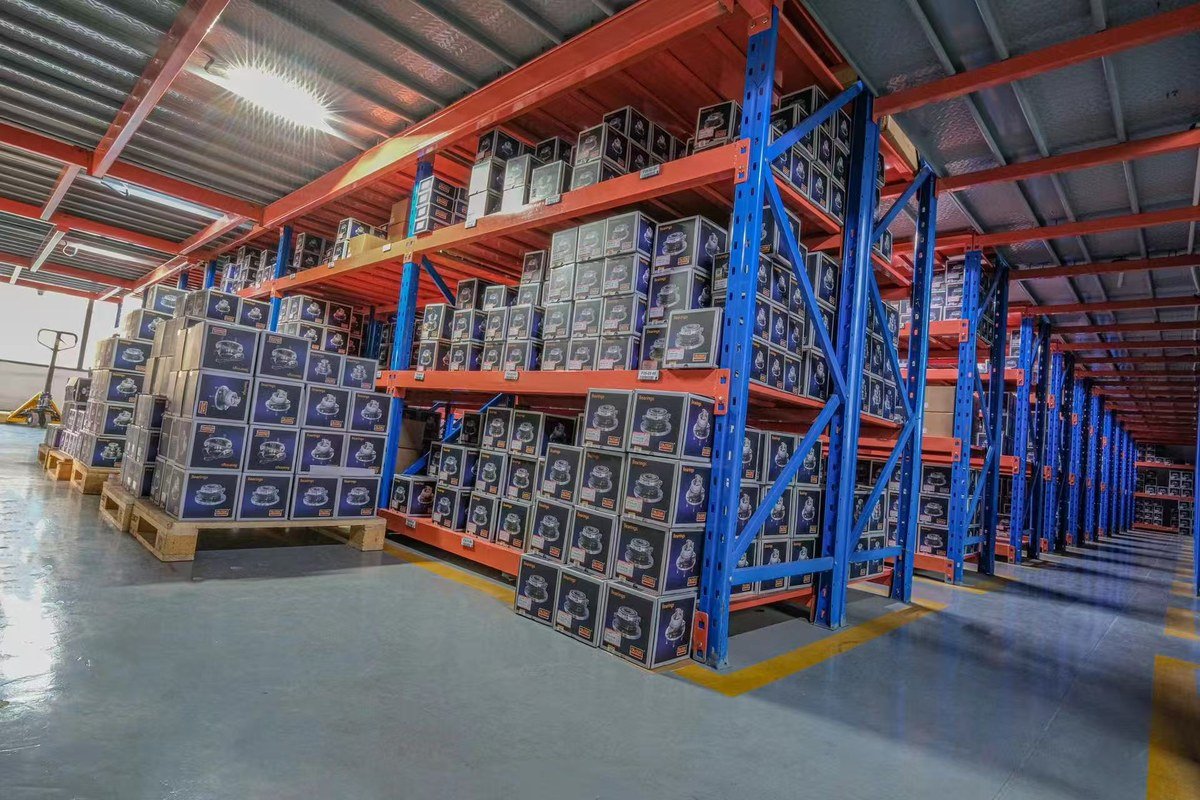
In aftermarket service, water and de-icing salt end more hub units than metal fatigue does. A bearing that stays dry usually reaches its design life; one that ingests water fails early through corrosion and grease washout.
Seal designs you will see on drawings
A single-lip nitrile seal with a garter spring is the basic arrangement. A dual-lip seal adds a secondary lip that keeps out splash. A cassette seal combines several lips with a labyrinth and a separate slinger, and is the usual choice for driven wheels and wet markets. Each increase in sealing performance costs a little drag, which is why the specification is tied to the application rather than to a general preference.
Encoders and sensor interfaces
Passive ABS uses a toothed steel ring and an inductive sensor; active ABS uses a rubber-bonded multipole magnetic encoder and a Hall sensor. The two are not interchangeable. An encoder can be demagnetised by a strong field, by a hammer blow or by storage on a magnetised surface, and paint or heavy rust preventive over the encoder surface can cause an intermittent fault that appears only at speed.
What to specify when ordering
State the seal type, the encoder type and the sensor interface explicitly, then confirm them on the sample. A hub that is mechanically identical but fitted with the wrong encoder will fit perfectly and still light the ABS lamp, which is one of the most common causes of a rejected shipment.
Where Do Tensioners and CV Joints Sit in the Same Running Gear System?
Hub units, tensioners and CV joints share one duty cycle, the same roads and the same thermal cycles, but they fail for entirely different reasons, so they are diagnosed separately. Suppliers who handle all three help a workshop cover a front-end repair in one order.
What a belt tensioner contains
A tensioner is a pulley carried on a sealed single-row or double-row ball bearing, mounted on an eccentric arm with a spring and a damping element. The spring holds belt tension constant as the belt stretches and as temperature changes, while the damper stops the arm from oscillating. Failures show up as a whine that is loudest at cold start, as a chirp from a belt that is no longer tensioned, or as edge wear from a seized or misaligned arm.
What a CV joint contains
A ball-type constant velocity joint, often called a ball cage joint in trade usage, consists of an outer race, a cage, six balls, an inner race and a grease-filled boot. Fixed joints at the wheel end allow steering articulation; plunging joints at the gearbox end also allow length change as the suspension moves. The boot is the weakest part: once it splits, grease leaves, water enters, and the joint begins to click on full lock before it fails outright.
Why they are reviewed together
A worn hub, a split boot and a tired tensioner often appear on the same high-mileage vehicle, and they interact: a failing hub can mask a CV noise, and a seized tensioner can be mistaken for a bearing whine. Buyers who source the whole front-end group from one supplier get consistent packaging, marking and traceability instead of three different label standards.
Which Failure Symptoms Point to Which Cause?
Diagnosis starts with when the noise appears, not with how loud it is. A bearing changes tone with load direction; a tyre does not, and a CV joint answers to steering angle.
| Symptom | Most likely cause | Confirming check |
|---|---|---|
| Hum or growl rising with road speed, louder when swerving one way | Raceway damage in the loaded row of the hub bearing | Road test with load transfer left and right, compare both sides |
| Play felt at 12 and 6 o'clock with the wheel raised | Worn bearing or a loose axle nut | Rock the wheel vertically, then check nut torque and stake |
| Play felt only at 3 and 9 o'clock | Steering or suspension joint, not the hub | Check track rod ends and ball joints before quoting a hub |
| ABS or ESP lamp straight after hub replacement | Wrong encoder type, damaged encoder or sensor gap | Read the fault code, inspect the encoder surface |
| Vibration in a narrow speed band | Wheel balance, tyre flat spot or flange runout | Rotate wheels, then measure runout with a dial indicator |
| Grease visible outside the seal | Seal lip damaged at installation, or overfilling | Inspect the lip and the fitting method, not just the part |
| Clicking on full lock under acceleration | CV joint wear after a boot failure | Inspect the boot for splits and check for grease loss |
Two rules keep diagnosis honest. First, confirm the noise is road-speed related and not engine-speed related, which separates running gear from auxiliary drives. Second, never replace a hub to cure a vibration that a wheel balance or a tyre inspection has not already excluded.
How Do You Read a Hub Drawing or Sample Before Ordering?
A hub unit is defined by its interfaces, so a part number alone is never enough to release an order. Two units with the same bore and the same bolt count can differ in offset, encoder type and flange thickness, and none of those differences shows up in a catalogue title.
Dimensions and features to confirm
- Flange outside diameter and flange thickness.
- Wheel bolt circle diameter, number of holes, thread size and stud press fit.
- Hub pilot bore, chamfer and the face the wheel registers on.
- Brake disc register diameter and the offset from the mounting face.
- Inner bore or spline, stub axle diameter and clamping length.
- Overall height from the knuckle mounting face to the wheel face.
- ABS details: encoder type, sensor hole position and orientation, pole count.
- Bearing internals: number of rows, contact angle, clearance or preload class, seal type.
What a sample tells you that a drawing does not
A sample reveals the seal actually fitted, the grease quantity, the surface finish on the disc register, the marking position and the packaging standard. It also exposes the things a drawing often leaves open: chamfer size, coating thickness and whether the encoder can survive normal handling. Buyers should keep a signed reference sample per part number, because that sample is the only reliable arbitration document if a later batch is disputed.
How drawing- and sample-based development works at Huayuan
Jinan Huayuan Bearing Co., Ltd., the manufacturer behind huayuanbearing.com, produces wheel hub bearings, hub units, tensioners and CV joints for aftermarket replacement and for OE supply, and develops parts from customer drawings and samples. Custom packaging and private-label marking are supported, and the main export markets served are in the Middle East and Southeast Asia. OE references in this article are for orientation only: fitment and interchangeability must always be confirmed against drawing and sample.
How Should Hub Units Be Installed and Inspected on Arrival?

Most premature hub failures in the field are installation failures, and most wrong shipments are inspection failures at goods-in. Both are cheap to prevent and expensive to correct after the part has been fitted.
Fitting sequence
- Confirm the new unit against the removed part before dismantling anything: flange shape, bolt circle, overall height and encoder type.
- Clean the knuckle bore and the mounting faces, and remove corrosion, old thread-locking residue and burrs, since any burr becomes runout.
- Support the outer ring, or the outer flange on a third-generation unit, so that press force never passes through the ball or roller rows.
- Press the unit in squarely; a unit pressed in at an angle damages the seal and preloads one row.
- Fit a new axle nut where the vehicle procedure calls for it, and tighten in the specified stages to the vehicle manufacturer's figure; many nuts are torque-to-yield and must not be reused.
- Measure lateral runout at the flange face with a dial indicator before the disc goes on.
- Reconnect the ABS sensor, confirm the gap and the latch, then clear stored fault codes.
- Road test at low and high speed, straight and in both steering directions, then recheck nut and wheel bolt torque at the interval the vehicle maker specifies.
Goods-in inspection checklist
- Match the laser marking and the packaging label to the purchase order and to the reference sample.
- Rotate each unit by hand: smooth rotation, no axial play, no grit or catch.
- Measure two or three critical dimensions per batch against the drawing.
- Inspect seal lips and encoder surfaces for damage, paint or heavy rust preventive.
- Check that rust preventive is present and that no condensation has formed inside the bag.
- Retain one unit per batch as a traceable reference sample.
Frequently Asked Questions About Wheel Hubs and Hub Units
How long should a wheel hub unit last?
There is no universal mileage figure, because life depends on axle load, road surface, water and salt exposure, wheel offset and installation quality. A unit fitted with correct torque, a new nut and a clean bore will normally outlast one fitted with reused hardware. Buyers should judge suppliers on dimensional consistency and seal quality rather than on any claimed service interval.
Can a wheel bearing be replaced without replacing the whole hub?
It depends on the generation. First-generation designs allow the bearing to be pressed out and replaced, and some commercial axles are similar. Second- and third-generation units are sealed cartridges where the bearing and flange are a single matched assembly, so the complete unit is replaced. Attempting to split a cartridge destroys its preload.
How can I tell a failing hub from noisy tyres?
Load transfer is the quickest test. Bearing noise changes noticeably when the vehicle swerves left or right, because the loaded side becomes louder; tyre noise usually stays the same. A bearing also keeps its tone on smooth new asphalt, while tyre noise follows surface texture. Confirming with the wheel raised and a hand on the spring seat helps before any part is ordered.
Does the axle nut have to be replaced every time?
Many modern axle nuts are torque-to-yield fasteners that stretch permanently when tightened, so they are single-use by design. Reusing one risks losing clamping force and bearing preload. The vehicle manufacturer's procedure decides the answer for a specific model, and the nut should be supplied with the hub unit where the application requires it.
Purchasing guidance, product information and company updates from Huayuan Bearing.