
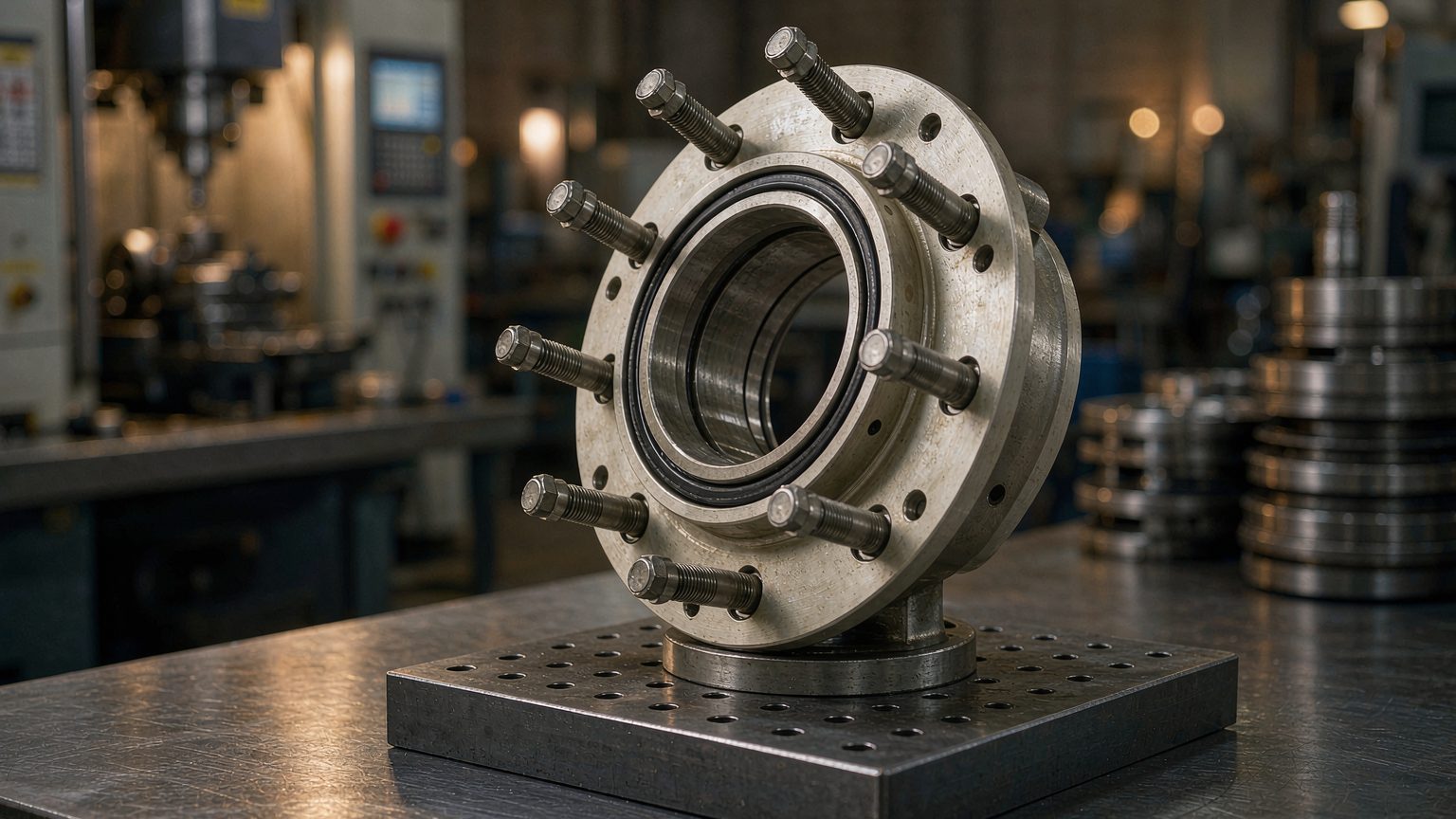
What Does “Jual Dodge Bearing” Mean in Practice?
“Jual Dodge bearing” is an Indonesian-language buying query, since jual means “sell” or “for sale”, so the searcher wants a supplier of Dodge wheel-end and driveline bearings rather than a definition. In trade practice the phrase covers four different product families, and the first task in any quotation is to establish which one the buyer actually needs.
Which Four Product Families the Query Usually Covers
- Wheel hub bearing units. Sealed, pre-greased assemblies that carry vehicle weight and locate the brake disc or drum on the axle. This is the item behind most Dodge bearing enquiries.
- Separate roller bearings. Older or serviceable hubs use cup-and-cone tapered roller sets, or cylindrical roller bearings pressed into a hub or knuckle.
- Tensioner pulleys and complete tensioners. Accessory belt drives run on sealed ball bearings housed inside a pulley, often on a spring-loaded arm.
- CV joint components. Constant-velocity joints at the driveshaft ends use caged ball or tripod roller sets inside a housing, sold as joints, boots or kits.
These four families sit at different price levels and fail for different reasons, so a one-line request such as “Dodge bearing” is ambiguous by design. Axle position, hub generation and dimensions settle it quickly, and the difference between a bearing alone and a complete assembly is set out in this comparison of wheel bearing versus hub assembly.
Why the Same Request Can Mean Different Parts
Distributors in Jakarta, Surabaya and Medan usually quote by vehicle model plus position: front left, rear right, with or without ABS. Two vehicles sold under the same model name can still use different hub generations across model years, and a facelift can change the ABS encoder without changing the flange. That is why experienced buyers send photographs of the old part together with a measurement sheet instead of relying on the model name alone.
How a Manufacturer Answers Without a Published Model List
Jinan Huayuan Bearing Co., Ltd. (huayuanbearing.com) works from drawings and samples: the buyer supplies dimensions, photographs and, where available, the original part number, and the part is developed and confirmed against that reference. The company also supports custom packaging and the buyer’s own brand, which matters to importers who sell under their own label. Huayuan’s export customers are concentrated in the Middle East and Southeast Asia, regions where Dodge vehicles are serviced largely through independent workshops and mixed-model parts counters.
What Are the Main Dodge Wheel Bearing Types and Generations?
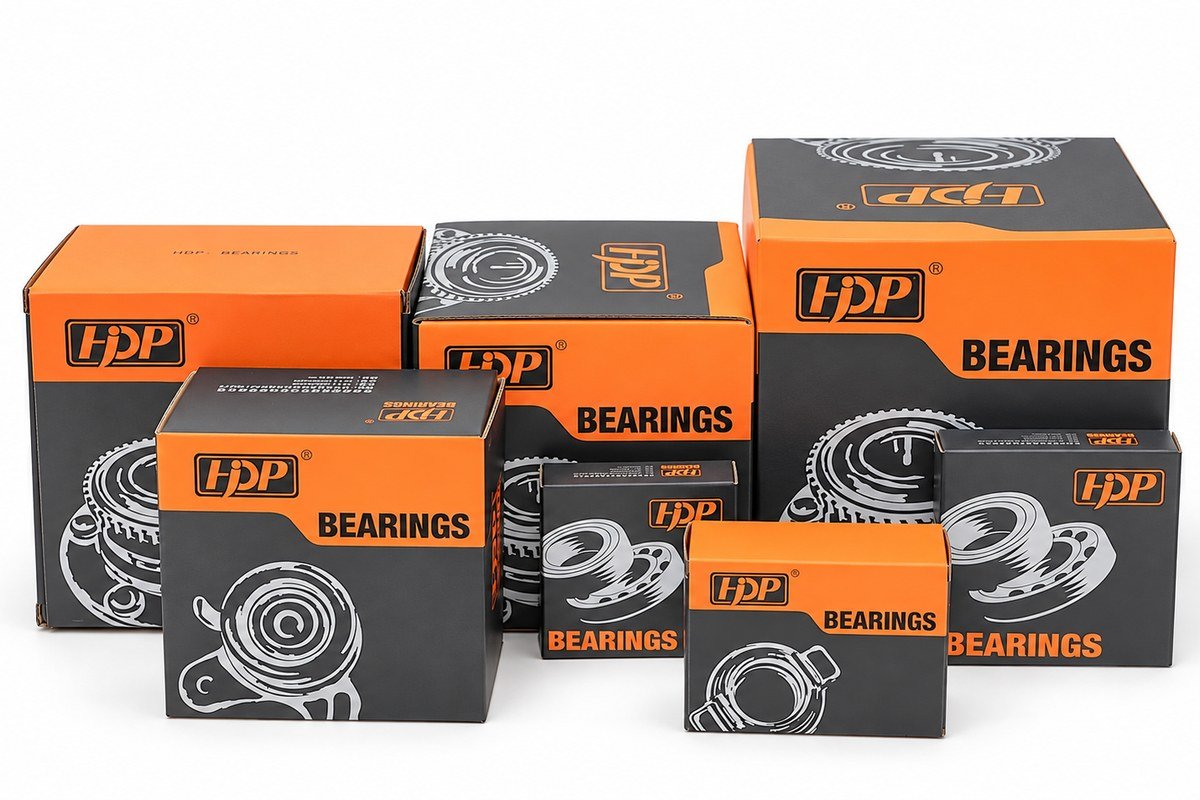
Dodge wheel ends use three generations of hub bearing unit, plus separate roller bearing sets on older or heavier axles. The generation decides how the part mounts, how it is replaced and which details must appear on the drawing.
| Feature | Generation 1 | Generation 2 | Generation 3 |
|---|---|---|---|
| Construction | Bearing cartridge only; wheel hub or flange is a separate part | Bearing cartridge with an integrated flange, bolted to knuckle or drum | Complete hub unit with wheel flange, both bearing rows, seals and encoder |
| Rolling element | Double-row angular contact ball or tapered roller set | Usually double-row angular contact ball | Double-row angular contact ball, or tapered roller on heavier axles |
| ABS interface | None in the bearing itself | Encoder ring often integrated in the seal | Magnetic encoder integrated; sensor mounts in the knuckle |
| Service action | Press cartridge out and in; hub is reused | Replace unit; knuckle and drum usually reused | Replace the complete unit; no repacking possible |
| Typical position | Older front and rear axles | Rear axles with drum or disc brakes | Front and rear corners of current passenger cars and SUVs |
| Main ordering risk | Matching cup and cone pair plus spacer | Flange bolt pattern and offset vary | Encoder type and flange geometry vary |
Generation 1: A Bearing Cartridge in a Separate Hub
A generation 1 hub carries a self-contained bearing cartridge pressed into the hub or knuckle, with the wheel flange as a separate component. Replacement means pressing one cartridge out and a new one in while keeping the original hub, so bore condition, roundness and press fit matter as much as the bearing itself. A scored bore will tilt the new cartridge and shorten its life regardless of part quality.
Generation 2: Bearing and Flange Combined, Still Bolted
A generation 2 unit combines the bearing with a flange that bolts to the knuckle or to a brake drum, so the bearing and its mounting face arrive as one part. It removes the press fit at the hub but keeps a bolted joint that must be torqued correctly and kept free of corrosion. Flange bolt circle, stud count and offset are the details most often quoted wrongly, and they are visible only on a drawing or a physical sample.
Generation 3: The Non-Serviceable Hub Unit
A generation 3 hub unit is a complete wheel hub: outer ring with flange and studs, two inner rings, seals, measured grease fill and an encoder, supplied as one sealed part. There is no repacking and no adjustment, so the whole unit is replaced. Encoder type, flange diameter and stud thread decide whether it fits, and those must be confirmed from the drawing and the sample rather than from a model name.
How to Tell Which Generation You Are Looking At
- Count the mounting faces: a plain cylindrical cartridge is generation 1; a bolted flange is generation 2; a full hub with studs and no separate spindle is generation 3.
- Look for the encoder: a brown or grey magnetic ring bonded to the seal usually marks an ABS-ready unit.
- Check the fastening: bolts into the knuckle point to generation 2, while a large central axle nut points to a generation 3 front corner.
How Is a Dodge Hub Bearing Unit Constructed?
A modern hub unit is a double-row angular contact bearing with integrated flanges, two seals, a measured grease fill and, in most ABS applications, a magnetic encoder ring, and each of those elements is a separate specification line on the drawing.
Rolling Elements, Raceways and Contact Angle
A hub unit carries two rows of balls or rollers on a common outer ring, with the inner rings butted together and preloaded against each other, which allows it to take radial load and axial load in both directions without external adjustment. Contact angle is set by the raceway geometry during grinding: a steeper angle favours axial stiffness, a shallower one favours low drag and fuel economy. Because both rows share one outer ring, the unit is matched at assembly and rows from different units are not interchangeable.
Bearing Steel and Heat Treatment
Hub bearings are normally made from through-hardening bearing steel, hardened and tempered to a hardness range commonly quoted between 58 and 64 HRC on raceways and rolling elements, with a dimensional-stability treatment before finish grinding. Flanges produced as separate forgings are often machined soft and then induction hardened at the bearing seat. A serious enquiry asks for the steel grade, the hardness range, the case depth where relevant and the inspection record that accompanies the lot; phrases such as “high quality steel” carry no usable information. Cleanliness — oxide inclusions and carbide segregation — drives fatigue life more than hardness alone, which is why bearing steel grade and cleanliness belongs on the audit list.
Seals: The Part That Decides Service Life
Hub bearing life is usually decided by the seal rather than by the rolling elements. A unit normally carries an outboard cassette seal with two or three lips, an inboard seal and a metal shield or slinger, and the lips run against a ground counterface on the inner ring. Lip material — nitrile, ACM or fluoroelastomer — is chosen for the temperature at the brake corner and must be compatible with the grease. A seal that is correct on paper still fails if the counterface is scratched during handling, so incoming inspection should look at lip condition, spring retention and shield crimping, as described in this guide to wheel bearing seal inspection.
Grease Fill and Lubrication
Grease fill is measured at assembly, typically covering between a quarter and two-fifths of the free space inside the unit, and it cannot be topped up later because the part is sealed for life. Overfilling raises churning losses and running temperature; underfilling starves the outboard row on long high-speed runs. Base oil viscosity, thickener type and low-temperature limit all belong on the specification, especially for buyers in hot climates where the brake corner sits at the top of the grease working range for much of its life.
Precision, Clearance and Preload
Sealed hub units leave the factory pre-set, so clearance is a manufacturing parameter rather than an installation one. Separate tapered roller sets are different: they need a defined end float or preload, commonly quoted as a small axial figure or as a torque-to-turn value, and either error shortens life. Running accuracy, flange runout and starting torque belong on the drawing together with a precision class where the application needs one, because a P0 part and a P6 part can share every dimension and still behave differently at speed.
Which Bearing Type Suits Which Load and Duty?
The rolling element must match the load direction first: radial loads suit cylindrical rollers and ball rows, combined radial and axial loads suit tapered or angular contact designs, and no hub bearing should ever be selected on bore size alone.
| Bearing type | Load direction | Rigidity | Typical position | Selection note |
|---|---|---|---|---|
| Double-row angular contact ball | Radial plus axial in both directions | Moderate | Generation 2 and 3 hub units | Low drag, suits ABS-equipped passenger axles; sensitive to contamination |
| Tapered roller, single or paired | Combined, one axial direction per row | High | Heavier axles, serviceable hubs, light truck and trailer | Requires defined preload or end float and a controlled grease fill |
| Cylindrical roller | Radial only | High radial | Gearbox shafts, differential pinion positions | Needs separate axial location; not a substitute in a hub unit |
| Deep groove ball | Radial plus light axial | Moderate | Tensioner pulleys, idlers, alternator | Speed capability and seal quality matter more than static rating |
| Needle roller or caged set | Radial in a confined envelope | High for its size | CV joint spiders and tripod joints | Hardness of the mating raceway is part of the specification |
Radial, Axial and Combined Loads
Radial load pushes the wheel down and is carried around the full circumference; axial load comes from cornering and from the lever arm of the wheel offset, and is carried by the contact angle. A double row of angular contact balls handles both, which is why one unit type serves front and rear corners of a passenger car. A pure cylindrical roller bearing carries radial load only and needs a separate axial location, so it is a poor repair choice where a combined-load position was designed.
Duty Cycle: Loaded Truck, Highway Cruise, Stop-Go City
Duty cycle changes the specification more than the vehicle badge does. A light truck that runs loaded needs a higher dynamic rating and a stiffer housing; a city delivery vehicle accumulates heat cycles and brake-side thermal input; a highway car mostly needs low drag and a seal that survives dust and pressure washing. Buyers should describe what the vehicle does, not only what it is, because two identical axles can need different grease and sealing for those duty patterns.
Tensioner and CV Joint Parts Are Different Load Cases
A belt tensioner pulley turns at engine speed under light radial load with a strong axial component from belt misalignment, so it uses a sealed ball bearing with a defined grease life, and the pulley hub and arm matter as much as the bearing. A CV joint at the driveshaft end carries torque at a variable joint angle, so its balls or tripod rollers run on hardened raceways with molybdenum-disulphide grease inside an intact boot. Neither is a wheel bearing, and neither should be quoted from wheel-end dimensions.
How Do You Read a Drawing or Sample Before Ordering?
Read the drawing from the mounting interface inward: main dimensions first, then flange geometry, then ABS provision, then seals, grease and marking. A part that matches bore and outer diameter but not flange offset will not fit, however good the bearing inside it.
- Confirm the main dimensions. Record inner bore, outer diameter and overall width or flange-to-flange height, taken at the same reference points on the old part.
- Map the flange geometry. Bolt circle or stud pattern, stud count and thread, flange outer diameter, and offset from the mounting face to the wheel face.
- Identify the ABS provision. Encoder type and pole count, sensor mounting position, and whether the sensor sits in the knuckle or in the unit.
- Specify sealing and grease. Lip arrangement, shield or slinger, grease type and fill, and the operating temperature range the corner will see.
- Photograph the markings. Laser marks, casting numbers and supplier codes on the old part are worth more than a written description, because they reveal which plant and which generation produced it.
- Cross-check OE references. Check whether a number has been superseded and whether the earlier and later numbers are physically interchangeable; bearing number supersession decides whether one part can serve two model years.
- Return the drawing marked up. Ask the supplier to confirm each line and, where the original number is uncertain, send a physical sample: it settles encoder type and flange offset faster than any catalogue.
A structured enquiry shortens this loop considerably, and the fields worth completing are listed in this wheel hub bearing RFQ checklist. Where an OE number is the only starting point, the limits of that approach are covered in OE number fitment and ABS hub bearings. For Dodge parts specifically, Huayuan confirms model coverage by drawing and sample rather than by publishing a fitment list.
Why Do Dodge Hub Bearings Fail, and How Do You Confirm the Cause?
Most hub bearing failures on Dodge vehicles come from contamination or installation error rather than from steel fatigue, so a failed part should be read as evidence before the replacement is blamed on the supplier.
| Failure mode | What you see | Usual cause | What to verify first |
|---|---|---|---|
| Water or grit ingress | Rust streaks at the seal, washed-out grease, dull grey raceways | Damaged lip seal, displaced shield, aggressive pressure washing | Seal lip and counterface condition |
| Fatigue spalling | Flaking pits on a raceway or ball, often in one band | End of calculated life, overload, misalignment | Actual axle load against dynamic rating |
| Brinelling | Indentations spaced exactly like the ball set | Impact during transport or installation, pressing through the rolling elements | Whether the part was dropped or hammered |
| False brinelling | Grey fretting marks after a long standstill | Vibration without rotation in storage or on a parked vehicle | Storage duration and transport conditions |
| Seal lip cut or rolled | Folded lip, displaced garter spring | Installation damage or contact with a sharp edge | Press tooling and guide sleeves used |
| Encoder damage | ABS lamp on, erratic wheel speed signal | Mechanical contact, metal debris, wrong sensor air gap | Encoder ring surface and air gap |
| Loose in the knuckle | Polished bore, fretting corrosion on the outer ring | Worn or out-of-round bore, corrosion, insufficient interference | Knuckle bore diameter and roundness |
Noise Diagnosis Without Guesswork
A failing wheel bearing usually produces a hum or growl that rises with road speed, changes when the steering is loaded left or right, and does not change when engine speed alone changes. Confirming the corner takes a short road test with gentle S-curves plus a lift on a hoist to check for play and roughness; the sequence is set out in this guide to hub bearing noise diagnosis. Noise alone does not prove the bearing is at fault, because cupped tyres and a worn CV joint can sound very similar.
Play, ABS Lamp and Uneven Tyre Wear
Lateral play at the top of the tyre, a pulsing brake pedal or an ABS lamp that appears at low speed point to the hub unit rather than to the brake system. Uneven shoulder wear often appears before the noise starts, because a bearing with excess play changes camber and toe under load. A short list of common wheel bearing failure causes helps separate normal wear from installation damage when a claim is being assessed.
How Should Bearings Be Installed and Inspected on Arrival?
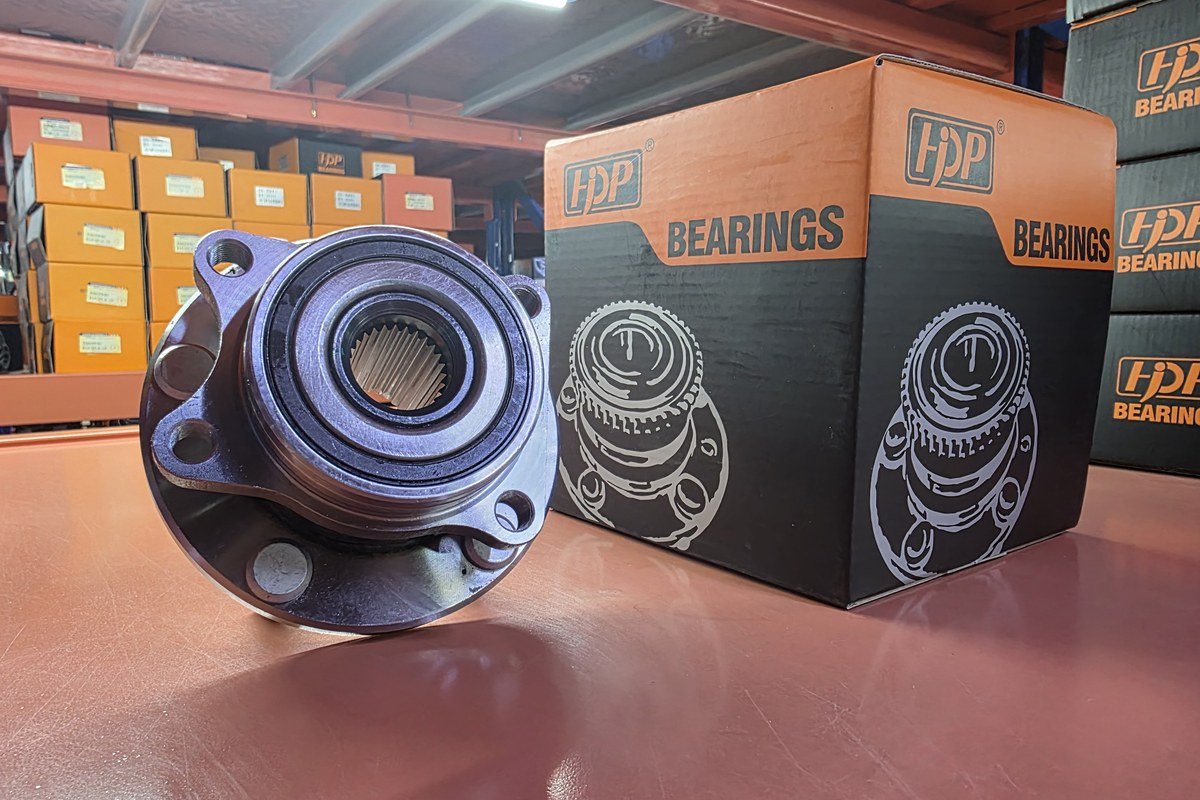
Careful installation and a documented incoming inspection prevent more failures than any specification upgrade, because press force applied to the wrong ring destroys a new bearing before the vehicle has moved a metre.
Installation and Replacement Sequence
- Clean the knuckle bore or hub seat, remove corrosion and burrs, and measure the bore; a burr becomes a tilted bearing once pressed.
- Fit the correct adapter and apply press force to the ring the design specifies — usually the inner ring on a hub unit, the outer ring on a cartridge.
- Never hammer the unit and never transmit force through the balls or rollers, even to start it square.
- Press or pull until the part seats fully against its stop, then check squareness before releasing the tool.
- Torque the axle nut or flange bolts to the workshop manual figure, with the vehicle on the ground where the manual requires it.
- Refit the ABS sensor, confirm the air gap and route the harness clear of the driveshaft and brake hose.
- Road test at low and high speed, re-check for noise, and confirm the ABS lamp extinguishes.
Incoming Inspection Checklist
- Measure bore, outer diameter, width and flange offset against the approved drawing, not against the previous shipment.
- Rotate each unit by hand: smooth rotation with no click, no roughness and no detectable end play beyond the stated figure.
- Inspect seal lips for cuts, folds or displaced springs, and check that shields are crimped squarely.
- Check the encoder ring for scores, adhesion and correct colour band, and keep it away from magnetic tools.
- Look for grease weep at the seals, corrosion on machined faces and damage to stud threads.
- Confirm markings, packaging and label data match the purchase order, particularly where a private label is used.
These checks are the practical half of supplier assessment, and the wider scoring model is set out in this guide to wheel bearing and hub assembly supplier evaluation. Batch-level measurement routines are described in hub bearing inspection practice.
Frequently Asked Questions About Jual Dodge Bearings
Is a jual Dodge bearing the same thing as a wheel hub assembly?
Not always. The phrase is used for hub units, separate cartridge bearings, tensioner pulleys and CV joint parts. On most current Dodge passenger cars and SUVs the front and rear corners use a sealed hub unit, while older axles may use a serviceable cartridge. Confirm which one the vehicle actually carries before quoting, because the parts are not interchangeable and the price levels differ.
Can Huayuan supply a Dodge bearing from an OE number alone?
An OE number is a useful starting point but not a complete specification, because superseded numbers, encoder variants and market-specific flanges can share a reference. Jinan Huayuan Bearing Co., Ltd. confirms each part against a drawing or a physical sample, and the final fitment is confirmed by drawing and sample rather than by catalogue lists. Photographs and measurements speed this up considerably.
What information makes a Dodge bearing quotation accurate?
Four items do most of the work: axle position, hub generation, the main dimensions including flange offset, and the ABS encoder type. Add a photograph of the old part with its markings, plus the quantity and packaging requirement. With those, a supplier can respond with a drawing for confirmation instead of a guess between several similar variants.
Do matching dimensions prove a hub bearing will fit?
No. Bore, outer diameter and width can match while flange offset, stud pattern, encoder pole count or seal design differ. Those differences decide whether the brake disc sits correctly, whether the ABS works and whether water reaches the raceway. Fitment should always be signed off on a dimensioned drawing or a sample comparison, with model coverage treated as provisional until then.
Purchasing guidance, product information and company updates from Huayuan Bearing.